
3 STR Hosting Myths That Sound Smart—Until They Cost You
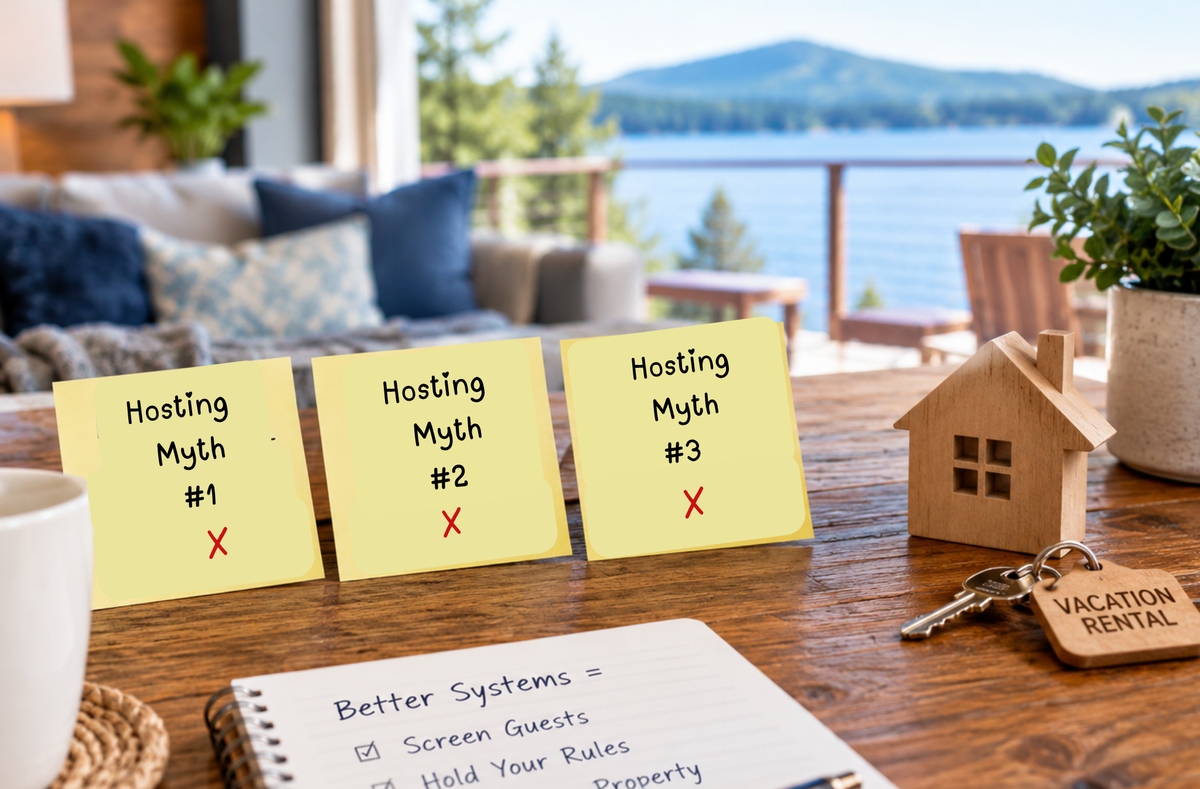
Every host has a mental rulebook—the things we're sure are true because we heard them from another host, read them in a Facebook group, or simply assumed they made sense.
I had one too.
And three of my “common sense” rules turned out to be expensive myths.
- Keep rates high to avoid bad guests
- Only host guests with a five-star review history
- Let Airbnb's AirCover handle the worst-case scenario
All three turned out to be wrong. Not slightly wrong—expensively wrong, in ways that showed up at the worst possible moment, with a guest already in the house or a damage claim already filed.
Here's what actually happened, and what I do differently now.
Myth #1: Lower Rates Mean Lower-Quality Guests
This is the myth I hear most from new hosts panicking over a slow season.
"If I drop my rate, I'll only attract bargain hunters who trash the place."
I get the fear. But after years of hosting in different markets, I can tell you: it isn't true.
Sometimes you have to drop your rate to rock bottom just to get booked at all. A slow shoulder season. A random Tuesday. A last-minute cancellation you need to fill.
A lower price doesn't necessarily lower the caliber of guest walking through your door.
What it usually does is potentially attract a different kind of guest—someone savvy enough to travel in the off-season, booking a large, fully loaded property because the price finally makes sense for their trip.
Some of my best guests ever came through at our lowest rates. Couples. Small families. Occasionally a dog in tow.
They wanted space and amenities more than a bargain—and found both at once. They were low-maintenance, appreciative, and treated the house like it mattered. Honestly, they're some of my favorite guests to host.
Here's the part that actually determines guest quality, and it has nothing to do with price: guest screening. That also includes your booking requirements–rental agreement signing, photo ID, security deposit, etc. These additional steps may screen out problem guests no matter your nightly rates.
That has to happen at every price point, every time, no exceptions. The rate you charge tells a guest what they'll pay. It tells you nothing about how they'll behave —only your screening process does that.
Myth #2: A Five-Star Review History Means Your Home Will Be Fine
This one is seductive because it feels so logical. A guest with many glowing reviews must be a safe bet, right?
I wish that were true.
Some of my worst guest experiences—property damage, a house left in genuinely horrendous condition—came from guests with a spotless five-star history.
A review history tells you how a guest treated past hosts, and maybe how well they've learned to play the review game. Not every host rates honestly. Even if they do, they may have different standards from yours. The review history doesn't tell you who the booker is bringing this time, what they're planning to do on your dates, in your house, with your rules.
That's why a great review history never talks me out of the basics:
- I screen every reservation.
- If something feels even slightly off, I ask questions before confirming.
House rules matter here too, and this is where hosts undo their own screening.
If a guest pushes back on a requirement clearly disclosed in your listing—ID verification, guest count, no parties—and you cave just to keep the booking, you've taught them something important: your rules are negotiable if they push hard enough.
Don't be surprised when that same guest treats your house rules the same way once they're inside.
Hold your line before check-in. It gets a lot harder to hold it after.
Myth #3: AirCover Is All the Damage Protection You Need
This is the most expensive myth on this list—I know because I tested it myself.
For a while, like a lot of hosts, I assumed AirCover was a safety net solid enough that I didn't need to think much harder about damage protection. At the very least, it seemed like a good first line of defense, right?
Then our pool pump got vandalized.
Our pool guy found the damage right after a guest's checkout. The pro documented everything in detail, and it clearly showed the cause was vandalism, not equipment failure.
I submitted a full incident report to AirCover's team.
The pump was barely a year into a normal 7-to-10-year lifespan. Replacing it, including parts and labor, cost us almost $2,000.
AirCover's final decision covered less than 30% of that.
The rest was made whole by our own damage protection policy—the coverage we'd put in place ourselves instead of relying on the platform to protect our property.
That's the real lesson: don't make platform-provided protection your entire risk-management strategy. Your own damage protection and insurance strategy should be designed around what you actually need covered—and the exclusions that come with that coverage.
AirCover—or any insurance or damage protection program whose exclusions you haven't personally reviewed—is a supplement to your coverage, not a substitute for it. And sometimes not even a reliable supplement.
Not to mention the time it takes to go through their claim process, and the risk of earning a retaliatory review that the booking platform won’t remove despite your appeal.
Know what you're actually covered for before you need to find out the hard way.
The Real Lesson: Stop Assuming You're Protected
Every one of these myths sounds reasonable—until you're the one holding the bill, dealing with a trashed house, or explaining why a $2,000 repair only got covered at 30% at best.
The truth is simpler than the myths—and less comforting: there is no nightly rate, review score, or platform protection that replaces good systems.
Screen every guest. Hold your rules. Understand your coverage. And build your operation so it can withstand the occasional guest who doesn't behave the way you hoped.
That's the mindset I coach hosts through: less magical thinking about who is a “good guest” or what's “covered,” and more systems that protect your business before something goes wrong.
Because the best time to discover a hole in your hosting system isn't after the damage is done.