
I Fired My Waffle Station (and My Reviews Didn't Notice)
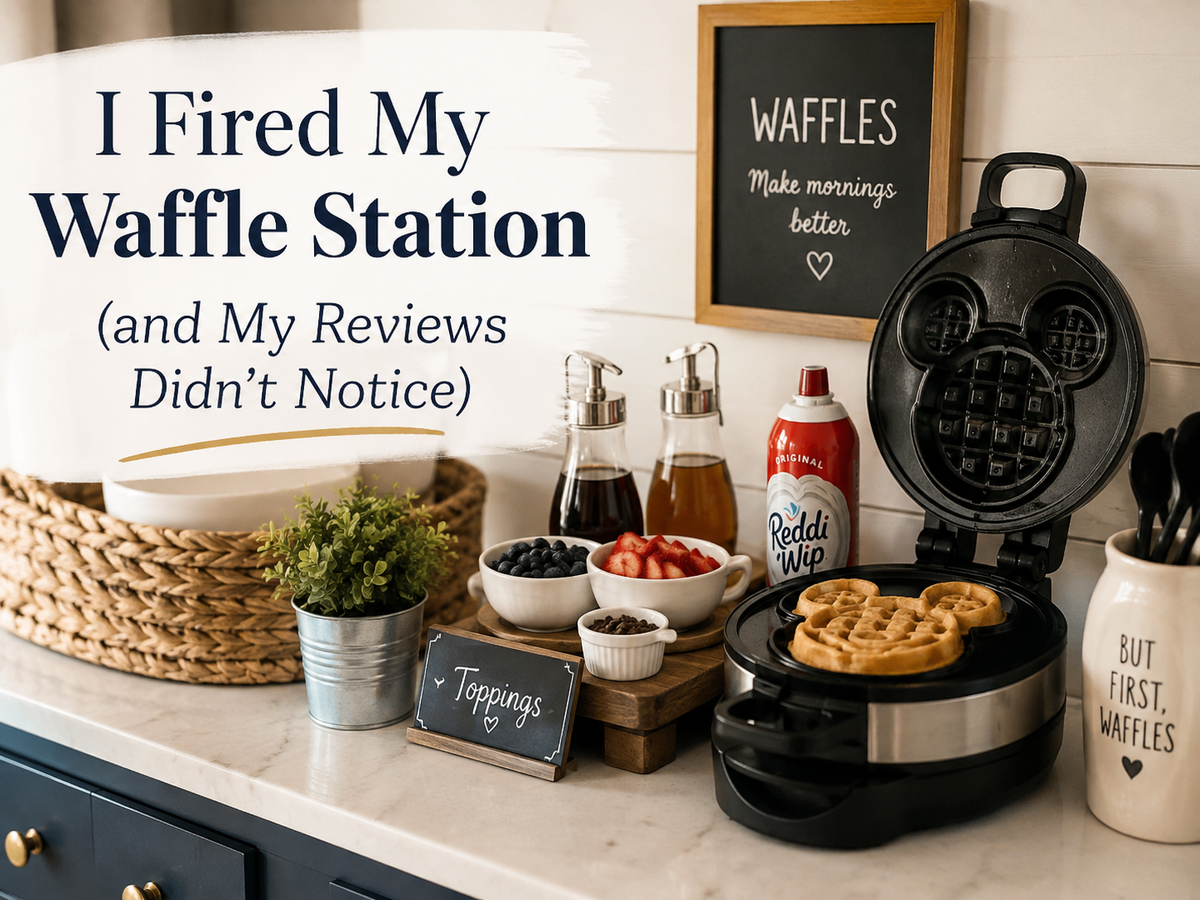
When we first launched one of our properties, I had a great +1 idea: a waffle station.
Waffle makers (including a Mickey Mouse version for the kids), mixes, syrup, the works. I imagined the little ones’ excitement and five-star reviews raving about the experience.
Instead, not only did I get more appliances for cleaners to check at every turnover, I got more supplies to restock every month or two.
Nobody mentioned the waffles in a review. Not once.
They mentioned the pool with disco lights. The theater room and arcade games their kids didn't want to leave. The proximity to the beach. The quiet neighborhood.
The waffle mix and syrup were used almost every stay, so clearly guests appreciated having them. But compared with the experiences that actually drove bookings and reviews, they were trivial.
So when the waffle supplies ran out, I decided to not restock them.
The waffle makers are still there for guests to use.
We didn't get fewer 5-star reviews. We just had a lighter turnover checklist, fewer supplies to manage, and one less thing to worry about.
That got me thinking: What if we stopped assuming that more amenities automatically create a better stay?
We're Selling a Home Experience, Not a Hotel Room
Here's the thing about hotels: they're simple on purpose.
Even five-star hotels aren't trying to fill every room with stuff. Towels, toiletries, coffee, clean sheets — the essentials are thoughtfully chosen and consistently delivered, room after room.
Hotels don't win by having the most stuff. They win by making the experience work, consistently.
STRs took a different turn. Somewhere along the way, "five-star" started to mean fully loaded — game rooms, specialty snacks, extra appliances, elaborate welcome baskets, and a growing collection of nice touches that all quietly become somebody's job to maintain.
The inventory lists get longer. Costs creep up. Cleaners have more to check. Hosts have more to restock, troubleshoot, and manage.
But guests aren't booking a collection of amenities.
They're booking a home — and the best homes aren't necessarily the ones with the most stuff. They're the ones where the right things work really well.
That's the thinking behind the framework I now use: Cut, Trim, Keep.
1. Cut It
Some things simply aren't worth maintaining.
Ask: Does this add more guest value than it costs to purchase, restock, clean, manage, or replace?
If the answer is no — and guests aren't booking because of it or talking about it afterward — cut it.
The waffle station was an easy one for me.
2. Trim It
Other things don't need to disappear. They just need to get smaller.
Our welcome basket was a good example. At launch, it was packed with items in the name of creating a "premium" experience.
But the property was already loaded with amenities, and most of those extras weren't contributing much.
So I stopped automatically restocking everything.
When something ran out, I asked whether it was worth bringing back. The basket gradually became a smaller collection of things guests actually enjoyed — a few kid-friendly items and a couple of branded items adults might take home.
Less cost. Less maintenance. Same guest experience.
3. Keep It, and Make It Better
This is the step that matters most.
Some amenities genuinely do make the stay better. Those are worth investing in but not necessarily by spending more money.
We have karaoke and a home theater surround-sound system at our properties, and guests genuinely love them.
The problem wasn't the amenities. It was the friction.
Guests sometimes struggled to connect their phones or figure out the system. So instead of replacing or upgrading anything, I focused on making the experience easier: clearer, guest-proof instructions placed exactly where guests need them.
Same amenity. Less frustration. Better experience.
And that's really the point of Cut, Trim, Keep.
The goal isn't to have less.
It's to spend your time, money, and attention on what actually matters to guests.
Less Isn't Lazy. It's Focused.
I'll admit it: cutting the waffle station initially felt a little like admitting defeat.
I'd spent money on it and envisioned the experience. But guests weren't rating the waffles.
They were rating whether the stay was easy, comfortable, enjoyable, and as good as promised.
And every bit of unnecessary operational work I eliminated gave me more capacity to make the things guests do care about work better.
That's a lesson I keep coming back to as a host:
Don't ask, "What else can I add?"
Ask:
- What can I cut because it isn't earning its keep?
- What can I trim because we're overdoing it?
- What do guests genuinely love that we could make easier or better?
That's a much more useful way to think about the guest experience and the business behind it.
If your STR has accumulated years' worth of "nice-to-haves," it may be worth taking a fresh look at what you're actually maintaining versus what guests actually value.
And if you're looking at the bigger picture — where your STR is creating unnecessary operational work, where guest friction is costing you, and where a few focused changes could have a bigger impact — that's the kind of work I help hosts think through at Savvy Breezy.