
FOMO or Lucked Out? Why I Walked Away From An 8-Bedroom STR Dream Property
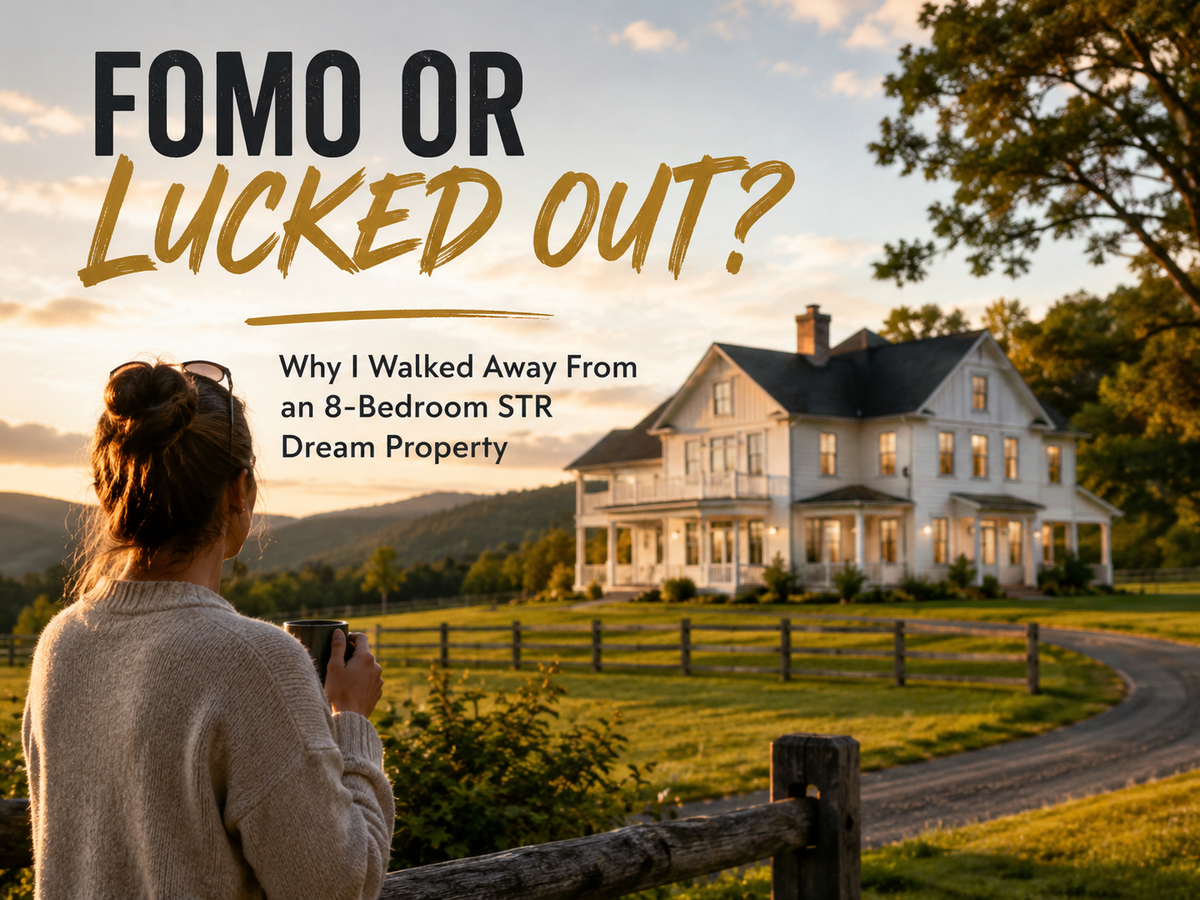
Two weeks ago, I thought we had found our next short-term rental.
An 8-bedroom custom-built farmhouse on 10+ acres. The kind of property that makes your imagination run wild.
I could already see it: families gathering around a fire pit, friends celebrating milestone birthdays, kids running through open fields. A pool, a hot tub, a sauna, outdoor games. A one-of-a-kind guest experience — I'd already sketched out the design vision.
I had run the numbers, studied the competition, and built the pro forma. The deal penciled out. I was excited.
The Most Dangerous Moment in Real Estate Investing
Most people think the riskiest part of buying an investment property is making the offer.
To me, the riskiest moment is after the offer gets accepted. That's when emotions start taking over. You stop evaluating. You start justifying. You begin looking for reasons to make the deal work instead of reasons it might not.
I've been there before. In prior deals, I'd fly out for inspections after we were already deep into due diligence. If we found major issues at that point, we could easily be out thousands of dollars in inspections, appraisals, and travel — with a lot of emotional momentum pushing us to close anyway.
This time, I did something different.
What Google Maps Couldn't Tell Us
As soon as we landed, we headed straight to the property — and brought our local STR designer and a general contractor along. The goal was simple: stress-test the vision before we fell any further in love with it.
Driving through the neighborhood, things started to feel different.
The listing had painted a picture in my mind. Reality painted a more nuanced one. Despite the acreage, privacy wasn't what we expected. A shared access road, backyard limitations, and larger-than-anticipated renovation needs all chipped away at the vision we'd originally underwritten.
Individually, none of these were dealbreakers. Collectively, they started adding up.
The Advice That Changed Everything
Before we left, our realtor made a suggestion: "Go knock on the neighbors' doors before you leave."
That's when I knew we had the right realtor.
Great realtors don't protect commissions — they protect clients. A great realtor helps you discover reasons to walk away. A bad realtor helps you rationalize staying. I've worked with both, and the difference shows up in moments exactly like this one.
 Jeana Deninger
The Conversation That Confirmed My Doubts
One neighbor eventually came outside to talk. He was friendly and not opposed to a short-term rental nearby. But the conversation gave us valuable insight into the realities of the area.
Nothing dramatic happened. No giant red flags appeared. Instead, the concerns that had been quietly growing in my head became harder to ignore.
The Spreadsheet vs. The Gut
On the flight home, I couldn't decide. Part of me wanted the property. Part of me worried about the uncertainties.
So I spreadsheeted everything in my head — pros, cons, opportunities, risks. I slept on it. Then I woke up and realized something: the property could probably work. But "could work" wasn't the vision I had underwritten.
The property had shifted from a great deal to a decent deal. And for a short-term rental business, decent isn't enough.
Know Your Non-Negotiables
Every investor has a different buy box. Mine includes things like:
- Guest privacy
- Strong guest experience potential
- Sufficient separation from neighbors
- Ability to execute the vision as underwritten
The important thing isn't what your non-negotiables are — it's having them, and sticking to them, especially when you're emotionally attached to a deal.
 Jeana Deninger
So... Did We Miss Out?
Maybe. I'll never know. The property might become a successful short-term rental for someone else.
But I don't have FOMO. Because I didn't lose a property — I gained clarity, confidence in my process, and proof that I can walk away when the facts change. That's a skill every real estate investor needs.
Maybe we did miss out. Or maybe we just avoided a mistake that would've taken years to discover. Either way, we're back to searching. And that's okay.
The right deal shouldn't require you to ignore your instincts to make it work.
Quick Takeaways
The riskiest moment in a real estate deal isn't making the offer — it's what happens emotionally after it's accepted. On-site due diligence, not just numbers, surfaces the risks a spreadsheet can't catch: privacy, shared access, and how the neighbors actually felt about it. Know your non-negotiables before you fall for a property, and be willing to walk away when a "great deal" quietly becomes just a decent one.
Need help with your STR acquisition strategy or due diligence process?
That's where Savvy Breezy comes in.
 Jeana Deninger